Running wholesale on Shopify no longer starts with a simple assumption that every native B2B feature requires Plus. The useful question is whether the capabilities available to your store support your buyers, commercial terms, and fulfillment process. A small brand selling case packs to independent retailers has different needs from a distributor negotiating unique contracts for hundreds of locations.
This guide explains how to plan Shopify B2B without Plus, where the current limits matter, and how to test the complete experience. Platform details were checked on October 1, 2026. Use the linked documentation during implementation because account availability and feature requirements can change.
Start with the current plan rules
Shopify's B2B features by plan currently lists Basic, Grow, Advanced, and Plus as supporting B2B. Non-Plus plans can assign three active catalogs across B2B markets and need new Shopify Markets for these catalog features. Direct company catalog assignment and advanced payment features remain Plus capabilities; contextual storefront and checkout customization through Markets is available on Advanced and Plus.
That distinction changes the buying decision. You should not purchase an app merely because an older article says wholesale is unavailable. Equally, native availability does not mean every negotiated pricing model fits the lower plans. Confirm the actual controls visible in your admin, then map them against a written requirements list.
Ask your team to describe the hardest real order you expect to fulfill. Include buyer identity, pricing, pack size, delivery destination, credit terms, tax treatment, and approval requirements. This example usually reveals more than a generic list of desired features.
Define your wholesale offer before configuring software
A wholesale program needs explicit commercial rules. Decide who qualifies, what they can buy, how prices are assigned, which order quantities are allowed, and who approves exceptions. Put these decisions into a short operating document that sales, support, finance, and fulfillment can use.
For an illustrative Canadian skincare brand, that document might describe approved retail stockists, case quantities for selected products, a standard trade assortment, and separate delivery arrangements for large orders. These are planning examples, not a claim that a particular setup suits every regulated product or business.
Distinguish rules that apply to everyone from negotiated exceptions. A standard price tier is relatively straightforward. A unique price for one branch of one customer, a deposit schedule, or a special fulfillment contract can change the required platform architecture. Count the exceptions before choosing the plan.
Model companies, locations, and buyers correctly
The account structure should mirror the organization placing orders. Shopify's companies and customers documentation distinguishes the parent company, its purchasing locations, and the people buying for it. Locations can hold operational information such as addresses, terms, and contacts. Set up B2B customers as companies to use the native experience.
Do not import a spreadsheet of email addresses without cleaning the relationships first. Two purchasers may belong to the same branch; one purchaser may order for several branches. A billing address can differ from a receiving warehouse. Duplicated company records make reporting and account support harder later.
Create a small pilot dataset with a single-location buyer and a buyer with multiple locations. Ask the account owner to verify names, addresses, contacts, and permissions. Keep a clear process for granting access, changing personnel, and disabling a buyer who leaves the business.
Design catalogs around real buying groups
A catalog defines the assortment and pricing available to a buying audience. Shopify's catalog guidance also describes quantity rules and volume pricing. When catalogs overlap, price behavior needs deliberate testing; never assume your preferred catalog name determines which price wins.
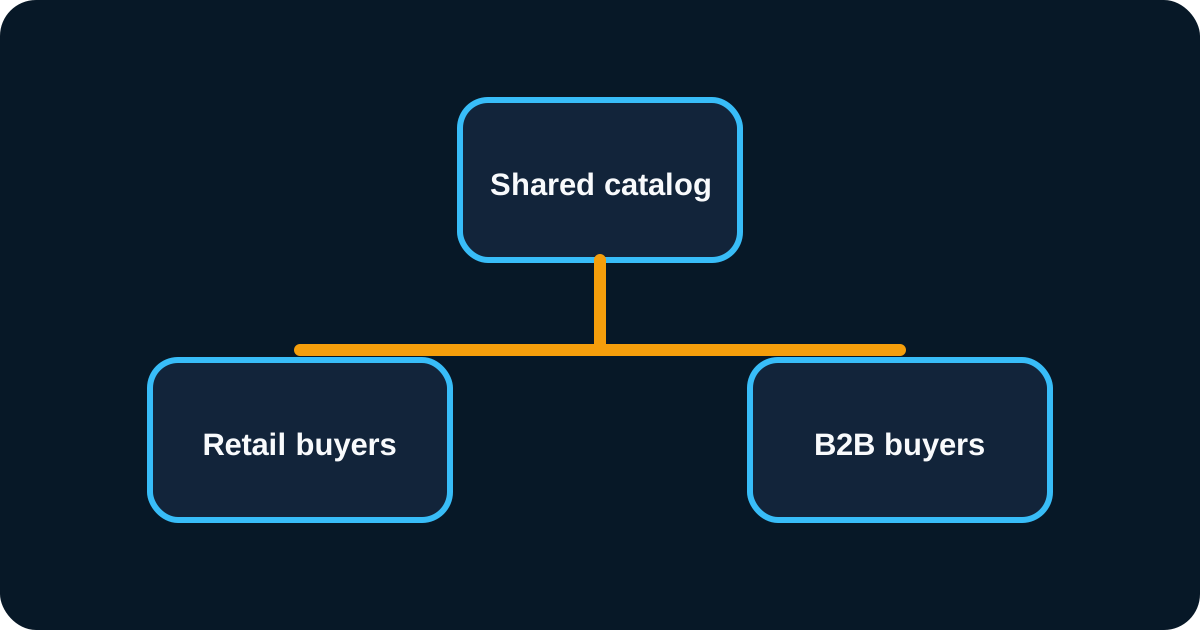
For a non-Plus rollout, draw the smallest set of buying groups that satisfies the business. Perhaps domestic retailers buy one assortment, distributors buy another, and international partners need a third. Those groups are illustrative; your available market structure and catalog assignments must support the intended eligibility.
Avoid spending all available catalog assignments on minor marketing distinctions. A separate email campaign does not automatically require separate prices or products. Reserve catalog complexity for meaningful commercial differences, and document what happens when a customer changes group or an item appears in more than one assortment.
Choose a shared or dedicated storefront deliberately
A shared storefront can let a brand maintain one merchandising system while serving retail and approved trade buyers. It requires careful separation of the customer experience: public visitors should see the intended retail offer, while authenticated business buyers should reach their relevant assortment and purchasing tools.
A dedicated wholesale store may suit a substantially different brand presentation, operating team, product range, or order workflow. It also creates additional maintenance, content, integration, and reporting work. Inventory synchronization becomes especially important if both stores draw from the same physical stock.
Write down the operational cost of each approach. Include theme maintenance, catalog updates, customer service, analytics, and the time required to reconcile orders. Our Shopify store design service can help translate these requirements into clear navigation and templates before development begins.
Make ordering fast for repeat purchasers
Wholesale buyers often know what they need. They may want to enter quantities, repeat an earlier order, check stock, or locate a specific SKU. A large lifestyle hero and a long brand story should not stand between an approved buyer and a routine replenishment purchase.
Prioritize clear product identifiers, pack information, visible prices, usable quantity controls, and accurate availability. Explain whether the displayed quantity means individual units, cases, or another sellable unit. Show minimums and increments beside the control where the buyer encounters them.
Test the experience on a laptop and a phone. A shop owner may reorder while walking the sales floor. Keyboard navigation, readable product tables, and useful error messages matter as much as visual polish. Do not rely on colour alone to explain a failed quantity rule or unavailable item.
Align payment terms with finance operations
Offering delayed payment changes the work after checkout. Finance needs to know who approved the terms, when payment is expected, what happens when it is overdue, and which orders should pause pending review. The storefront should reflect an approved policy rather than invent one.
Map the order lifecycle from submission through approval, fulfillment, invoicing, and payment reconciliation. If a salesperson negotiates an exception, record it in the system used by the fulfillment and finance teams. An informal email thread is easy to lose when several people handle the account.
Review special payment requirements before launch. If you need deposits, partial payments, or payment requests tied to fulfillment, compare the current plan limits against the actual workflow. Do not promise these capabilities to buyers until the complete transaction has been verified in your chosen setup.
Treat tax and delivery as explicit requirements
Business purchasing does not automatically imply tax exemption. Collect the information required by your business process and have the relevant finance or tax specialist confirm how it should be applied. Preserve the evidence and approval trail your organization needs.
Delivery also changes with order size. A single parcel, several cartons, local delivery, and freight may require different quoting and handling arrangements. Make any manual quote or order-review step clear before the customer expects a final delivery price.
For Canadian merchants shipping across the border, connect the wholesale workflow to the same product classification, origin, carrier, and operational checks used for other international orders. Our Shopify store maintenance guide explains how to keep those checks owned and repeatable instead of treating them as one-time setup notes.
Add an app only for a documented gap
An app can be useful when it solves a specific missing requirement, such as a specialized approval process, quoting experience, or integration. Start with a testable statement: a particular buyer must complete a particular task under a particular rule. Then evaluate whether the app actually delivers that result.
Check how it stores prices, identifies buyers, handles discounts, and interacts with checkout. Ask what happens if the app is disabled, a theme changes, or the merchant moves plans. Review whether the data can be exported and whether existing URLs or customer records depend on the app.
Our Shopify B2B app overview can help organize the comparison. Build a short evaluation against your own requirements rather than treating the largest feature list as the best fit. Every additional system creates another owner, renewal, and maintenance responsibility.
Run a realistic acceptance test
Use a written scenario matrix before inviting all customers. Include a public visitor, an approved buyer, a buyer assigned to another location, a new applicant, and a contact whose access has been removed. Confirm the expected assortment, price, permissions, and next action for each.
Test quantities below the minimum, valid increments, a volume break, an unavailable product, a changed address, and a repeat order containing a retired item. Verify the order in the admin as well as the storefront. Fulfillment staff should receive the same units and instructions the buyer understood.
Complete the operational handoff with finance and support. Confirm the invoice details, notification wording, payment status, shipping process, and escalation path. Record actual screenshots and order references from approved testing so future changes can be checked against a known baseline.
Measure the program after launch
Useful early measures include approved accounts completing a first order, repeat purchase behavior, failed ordering attempts, support requests, and manual corrections. Look at patterns by buyer group and product range. A low reorder rate may reflect seasonal purchasing, unavailable inventory, or a difficult workflow; the number alone does not identify the cause.
Keep a short exception log. If staff repeatedly override a quantity rule or send a separate price sheet, investigate whether the program rules or storefront need adjustment. Resolve recurring friction before expanding to additional buying groups.
Set an owner for catalog accuracy, account access, and release testing. Wholesale systems become unreliable when everyone assumes another team maintains the details. A small, current operating guide is more useful than a comprehensive document nobody updates.
Common questions about Shopify B2B without Plus
Can I use Shopify B2B without Shopify Plus?
Yes. Current Shopify documentation lists B2B on Basic, Grow, Advanced, and Plus, with feature limits by plan. Confirm availability and Markets requirements for your store before implementation. The correct plan follows your commercial requirements, including pricing assignments and payment behavior.
How many B2B catalogs can a non-Plus store use?
Basic, Grow, and Advanced can assign up to three active catalogs across B2B markets. Direct assignment to individual companies or locations requires Plus. Count active assignments carefully and test overlapping assortments before assuming a three-tier pricing spreadsheet maps directly to three independent customer groups.
Do I need a wholesale app?
Only if verified business requirements exceed the native features available to your store. Test the exact gap and the app's checkout, account, inventory, and maintenance implications before installing. A focused pilot can reveal whether an app saves work or introduces a second pricing system to maintain.
Can retail and wholesale share one Shopify store?
They can, when customer access, pricing, navigation, inventory, and operations are configured appropriately. Test retail and wholesale sessions separately before launch. The choice should account for who maintains the catalog and how the two channels compete for available stock.
If your requirements are clear but the architecture is uncertain, request an AreoTech audit. Bring sample buyers, pricing rules, and representative orders so the review can produce a practical implementation scope.