
Shipping a Shopify order from Canada to the United States involves more than choosing an inexpensive label. The customer sees a delivery promise and a checkout total. Your warehouse sees a parcel, customs information, and a carrier service. If those two views disagree, the result can be an unexpected bill, a refused delivery, or an expensive support conversation.
The practical objective is to make each stage tell the same story. This guide explains how to build that process without assuming yesterday's tariff rule still applies. It is an operational planning guide, not a determination of the duties or taxes owed on an individual shipment. Check current official guidance and obtain qualified advice for your products.
Begin with the route and the product
Write down where stock physically leaves, where the buyer receives it, who sells it, and which business arranges transportation. A Canadian brand can ship imported products from a Canadian warehouse, Canadian-made products from an American fulfillment centre, or a mixture of both. Those are different operating situations.
Next, describe the actual products. Record materials, intended use, manufacturing origin, value, weight, and any restrictions relevant to the chosen route. A catalogue label such as accessories is useful for merchandising but rarely sufficient for shipment preparation. Have the person responsible for product sourcing review the information rather than asking the shipping team to guess.
The US Customs and Border Protection tips for new importers and exporters directs businesses to classification, entry, and restricted merchandise guidance. Use that official starting point to identify questions for your customs broker or carrier. Do not translate a social media anecdote into a store-wide customs policy.
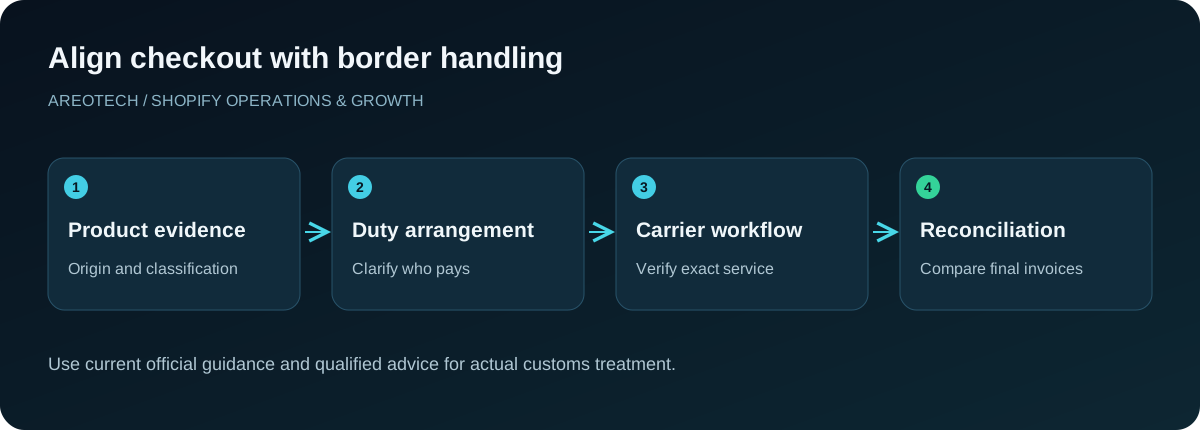
Separate shipping charges from border charges
Customers often use shipping to mean every cost between purchase and delivery. Your operating model needs greater precision. Transportation, duties, import taxes, brokerage, handling, and adjustments may be separate charges with different collection processes. A free shipping promotion does not automatically mean the merchant absorbs every possible border expense.
Create an internal cost map showing each charge, who estimates it, who collects it, who pays the supplier, and where it appears in reporting. This map should include charges paid later through a carrier invoice. Otherwise, a profitable-looking order can become unprofitable after accounting receives the final bill.
Use the map to review customer wording. If you promise an all-inclusive amount, confirm what the selected service actually covers. If a buyer may face charges on arrival, explain the arrangement clearly before purchase. A vague sentence hidden in a policy does little to help someone choosing between two delivery methods.
Build reliable customs data in your catalogue
Create a controlled record for each sellable item that includes its approved description, classification, origin, and source evidence. Keep ownership visible: someone should resolve missing values, approve changes, and review new suppliers. Copying the origin from the warehouse address is not a reliable process.
Shopify's duties collection documentation explains the importance of Harmonized System codes and country or region of origin. It also warns that checkout amounts are estimates and inaccurate product information can produce additional charges. Review its current requirements before enabling collection.
For a mixed-origin catalogue, test items from more than one source. Where variants differ materially, check the data at the level used by your fulfillment integration. Keep a small exception queue for products awaiting review instead of quietly assigning the same default to everything. Defaults are convenient only when they represent the merchandise accurately.
Choose who handles duties before configuring checkout
Decide whether your intended service collects applicable duties from the buyer before delivery or leaves collection for a later stage. Shopify uses delivered duty paid, or DDP, terminology when describing supported upfront collection workflows. The checkout setting and fulfillment service must agree; turning on a calculation does not independently change a carrier contract.
Ask the carrier or fulfillment partner to walk through an actual sample shipment. Confirm which account is billed, how duty information travels with the shipment, whether labels support the intended arrangement, and how adjustments are reported. Obtain an answer for the exact service you plan to purchase, not merely the carrier's brand name.
Shopify's international duties and import taxes overview is the relevant platform reference. Pair it with your carrier's current documentation and a qualified customs review. The aim is a verified workflow from checkout to invoice, including the exceptions, rather than a reassuring badge on the product page.
Review postal and courier services separately
A store may use a postal service for some parcels and a commercial courier for others. Avoid assuming the same calculation, documentation, and billing behavior applies to both. Ask how each service handles the route, product category, delivery terms, and information supplied by Shopify or your shipping app.
Build a comparison using representative parcels instead of a single light package. Include your most common order, a bulky order, a mixed-product order, and an expensive order. Record the expected transit range, handling process, tracking visibility, and procedure for missing documentation alongside the transportation quote.
Check service notices before launching a promotion. Operational interruptions can change the delivery experience even when your store settings are correct. Give the warehouse a clear alternative service and customer communication process. A backup carrier is useful only when the account, packaging, and staff instructions are ready before orders accumulate.
Make the delivery promise understandable
Tell shoppers where the shipment originates, how long order preparation usually takes, and how delivery timing is described. Distinguish your own processing window from transportation estimates. Avoid promising a customs clearance date that your team cannot control.
Place the essential explanation near the buying decision, then provide details in a readable shipping policy. Explain what the checkout amount covers in plain language. If different services use different payment arrangements, make those differences visible where customers select the service rather than expecting them to infer the distinction.
Review confirmation emails and support templates as part of the same project. Customers should not receive one promise on the product page and another after payment. Our checkout abandonment guide explains how unexpected costs and unclear delivery information can interrupt otherwise healthy purchase journeys.
Run a complete order rehearsal
Create a test matrix covering the products, origins, destinations, and services you actually sell. Use approved testing procedures for checkout and fulfillment, and avoid generating real charges without the appropriate internal authorization. Record the cart, address, selected service, calculated charges, and resulting order details.
Then ask the fulfillment team to inspect the information they would receive. Can they identify what was collected? Is the intended service available? Are product descriptions and origins present? Can they obtain the appropriate customs documents without manually recreating information from a spreadsheet?
Include an exception scenario. Change the parcel size, remove an unavailable service, or examine how staff handle an item needing classification review. A rehearsal that follows only the easiest order proves little about the support burden after launch. Record a pass or a specific action owner for every scenario.
Reconcile the first shipments against invoices
Treat the first release as a controlled operating review. Match the buyer's payment, the shipping label transaction, and the final carrier charges using an order reference. Keep transportation differences separate from duties and other adjustments so the cause remains visible.
An illustrative reconciliation might show that a bulky gift set consistently costs more to ship than expected while single-item orders match closely. That points toward packaging or service selection work rather than a blanket increase to every customer's charge. Investigate patterns before adjusting your commercial policy.
Share results with merchandising and finance. If a product repeatedly requires manual intervention, the fix may belong in catalogue maintenance or supplier onboarding. Our store maintenance guide can help turn recurring checks into assigned responsibilities rather than an informal task remembered only after a complaint.
Prepare for returns and refused deliveries
Cross-border returns deserve their own written process. Explain who approves the return, where it should go, what documentation the customer receives, and how support determines the refund. Do not assume the outbound shipping workflow automatically handles goods coming back.
Ask your carrier and adviser how your business should document returned merchandise and any potential recovery of charges. The correct treatment depends on the transaction and applicable rules. Give support approved language and an escalation contact rather than inviting agents to make individual promises about customs refunds.
Track refused deliveries separately from ordinary product returns. A refusal caused by an unexpected payment request suggests a communication or billing problem. A return caused by product fit suggests something else. Combining both into one return-rate metric hides the operational change that could prevent the next incident.
Give changes an owner and a review date
Cross-border settings should not become permanent assumptions. Assign someone to monitor relevant carrier notices and official changes, with a backup owner during holidays. Record the source, date reviewed, affected products, and action taken whenever the shipping process changes.
Before a large campaign, review the destination assortment, current product data, selected services, and customer wording together. A new bundle or supplier can introduce a shipping difference even when the storefront looks unchanged. Include fulfillment staff in the review because they see recurring exceptions that marketing reports do not capture.
Keep a short rollback plan. If a service becomes unreliable, know how to pause the affected offer, update the message, and handle already accepted orders. A controlled pause with accurate information can protect customer trust better than continuing to take orders against a delivery promise your operation cannot meet.
Questions about Canada to US Shopify shipping
Are orders shipped from Canada automatically duty-free?
No. The warehouse location alone does not determine how an item is treated. Classification, actual product origin, current rules, shipment details, and required evidence all matter. Have your carrier or customs adviser evaluate the merchandise you sell, and avoid advertising an exemption based solely on a Canadian return address.
Can Shopify collect duties before the parcel arrives?
Eligible configurations can calculate and collect duties at checkout. Confirm the current requirements in Shopify's documentation and verify a compatible fulfillment service. Test the whole process, including the label and later invoice, because collecting money from the buyer and arranging the correct carrier billing are separate operational steps.
Why does the carrier invoice differ from checkout?
Checkout relies on the information available when the order is placed. Package changes, corrected customs data, service charges, and assessments may create differences later. Reconcile a sample of completed shipments and investigate recurring causes. Do not assume every difference is a Shopify calculation error or automatically pass it to the buyer.
If your shipping promise and fulfillment process are difficult to reconcile, request an AreoTech audit. Bring representative orders, current policies, and carrier invoices so the review can identify concrete checkout, catalogue, and integration improvements.